Last Week!

Hello everyone,

This class has been the most delightful experience to begin my journey at Liberty University. I am so blessed and humbled to have shared a course with such talented and faithful people. 

During this class, I learned not only about new technologies, but I had to create AND maintain a website! The most challenging part was finding the time to research the information that I used to write my posts and then making the videos and uploading them to the school’s discussion board and then the blog. An educator website is beneficial when you have to deliver information to a big group of people. After making the videos, I realized that I could share the link for my blog’s website with the parents of my class so they can see all the activities we do without compromising the privacy of my students by being posted online. If I had time to change or make my website different, I would have published more articles related to the topics I discussed every week. I believe that readers could benefit from supporting peer-reviewed sites. I wish I had more time between my work and housework to publish more information while I was in class. 

I believe that online information and social websites could be a great educational tool. However, to do something like this, educators and students alike should have a professional page or a specific site such as LinkedIn to communicate without having to feel the pressure of an online presence or having to sacrifice their privacy. 

When it comes to the Church, we need to ensure that they move forward with the times and the new technologies coming up. According to Stetzer (2019), ” Social media is where younger generations are interacting. It’s the new marketplace. It may be unnatural for past generations, but it is how the community for younger people is now started and developed.” It is fundamental for the Church to reach the new generations and interact with the community in person as well as through the Internet. 

I thank you all for providing great feedback to my blog and wish you all the success and blessings in your upcoming classes. 

Have a great life!

-Leslie
How to Use iMovie-Tutorial

During this class, I had to familiarize myself with new technologies that I could easily use in my classroom with my students. For the longest time, I used paid applications that I had found at the iTunes store to create short 1-minute videos, not knowing that iMovie is not only free but so easy to use.

I wanted to create a presentation about iMovie for this week’s project as I had to learn how to properly use it two weeks ago to make my video for my Spanish Speaking Skill presentation. I did not use this application during my Week 2 assignment as I was not familiar with it yet. I had to work on my video presentation and thought that this was an excellent opportunity to learn about iMovie and how beneficial it could be for my students in the future. As a teacher and Apple user, I do not like to fall behind with new technologies because, in today’s world, that is a disadvantage to teach the students.

For this video, the skill is to use the iMovie application for making educational videos with my students. I created an “artifact” in the form of a tutorial to explain in a step-by-step how to use the application. This video demonstrates how easy it is to create a movie or trailer using iMovie. Once you find the app in your Apple device, click on the big plus sign to create a new project. After this step is completed, the user can add pictures or small clips to put the presentation together. The user can also add transitional features, as well as music and voice-over to the project. I will keep using this application to make videos with Spanish vocabulary for my students, and for the parents of my students with class pictures.

Technology in the Classroom: Making the Best of It!

Technology is transforming the classrooms around the world. Through this article, the authors explore how teachers use technology to enable the learning process in order to make it an easier learning experience for the students. As a teacher, I find this studies very valuable as they provide an insight into how the education world is moving forward with new devices and applications that assist during the learning process.

“Research suggests that collaborative learning promotes critical thinking and helps students retain information longer.” (Johnson & Johnson, 1986) Teachers work around the clock to incorporate new technologies into their teaching and bring the world to the classroom by sharing valuable information through these platforms. Schools have integrated S.T.E.A.M. oriented curriculums in order to bring Technology as a necessity to the children, along with Science, Engineering, Art, and Math.

The article also provides an insight on how technology could become a pitfall if not applied correctly into the curriculum. These methods need to align with the way that students learn or technology could not properly work in the classroom. “Research-based principles of learning indicate that what and how much is learned are influenced by motivation to learn, which is stimulated by tasks of optimal novelty and difficulty, relevant to personal interests, and providing for personal choice and control” (McKnight, O’Malley, Ruzic, Horsley, Franey & Bassett, 2016).

Last, I believe that it is important to highlight the teacher’s position during the learning process when technology is involved. Teachers are the ones who allow the students to have multiple pathways to find the learning style that worls for them when it comes to technology and guide them through the process so they find the right motivation to learn and improve their learning skills.

References:

Johnson, R. T., & Johnson, D. W. (1986). Action research: Cooperative learning in the science classroom. Science and Children, 24, 31–32


McKnight, K.; O’Malley, K.; Ruzic, R.; Horsley, M. K.; Franey, J. J.; Bassett, K. (2016). Teaching in a Digital Age: How Educators Use Technology to Improve Student Learning, Journal of Research on Technology in Education, 48:3, 194-211, DOI: 10.1080/15391523.2016.1175856

Social Media Platforms for Education

Social media is rapidly shaping the world around us. In an environment where everything is directly linked to technology, it is difficult to separate how social interactions develop between people. The new technologies are also shaping the way people interact in a classroom. Although some people are skeptical of interacting on a social media environment for educational purposes, the new social media websites and applications allow people from all over the world to interact and feel connected.

Although the various social media platforms have different functions and purposes, they also have a number of structural features in common: content is user-generated or reposted from elsewhere; it is shared with others within a peer-to-peer community; and there is typically a crowd-sourced process of curation, evaluation, and commentary. (Boyd & Ellison, 2008)

People as using social media pages for exchanging information on school papers, sending each other peer-reviewed articles, and by working together on different research on school topics. I have colleagues from Spanish-speaking countries and I use social media to keep up with recent developments in the educational curriculum for Spanish-speaking students or science-related topics. I find it interesting how I can connect with people through a social media platform just by sharing a common interest. I believe it to be more reliable than other channels of communication such as emails or even yearly conferences. The advantage of social media pages is that things happen quickly and people usually reply faster than any other platform due to the urgent nature of how things tend to happen.

My main concern with these type of technologies is that students get bombarded with unnecessary information that is not school related. If there was a social media app such as Facebook or Instagram that was solely oriented to educational topics, it would not be concerning for teachers as our students would be focused on what was really important to them. I believe that there should be a sole social media page directed to education where students and teachers alike could interact and exchange information based on their areas of study or topics of interest.

The new technologies and social media applications are another way to spread God’s words. The Church is using social media to interact with its followers and to teach people about the rightful path in life. Social media has allowed the Church to reach countries and places where the word of God has not reached yet or where the political or social environment is not favorable for people to have a religious preference or faith. These new social media apps help the Church to spread God’s love throughout the world.

References:

Boyd, D. M.; Ellison, N. B. Social Network Sites: Definition, History, and Scholarship. Journal of Computer-Mediated Communication 13, no. 1 (2008): 210–230.

S.T.E.A.M. Education

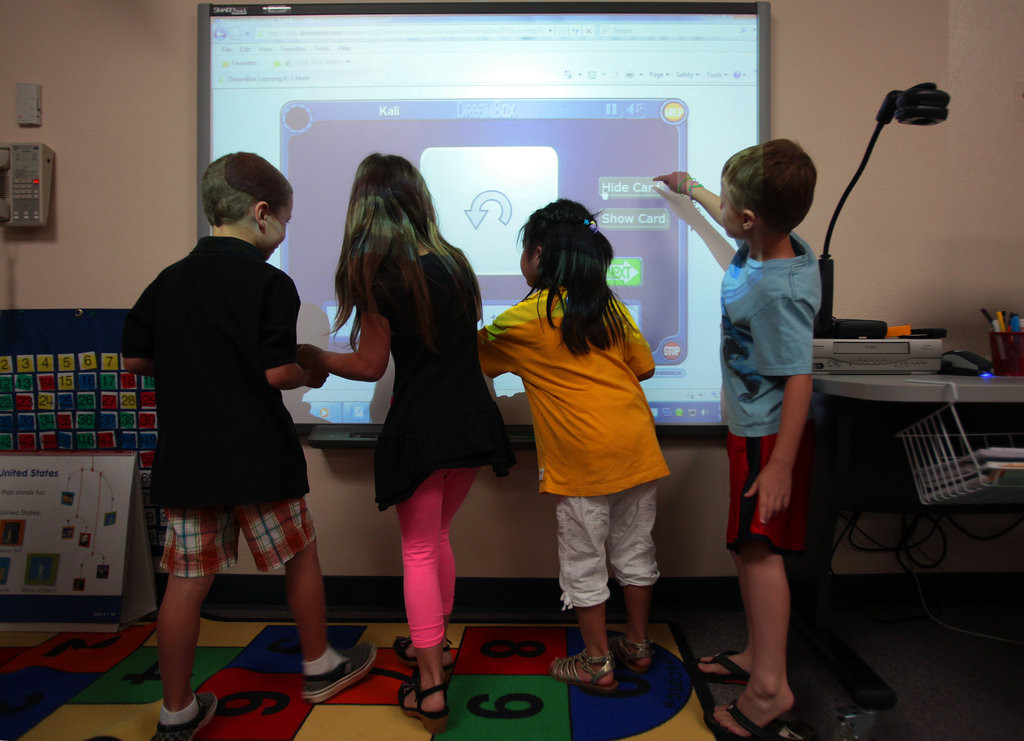
Teachers should use everything around them to turn every situation into a learning opportunity. With the advancements in technology, schools are focused on STEAM education more than ever, as well as providing an easier path to those students with a complicated agenda or in far away locations. As a teacher, I like to use computers and cellphones to support my class curriculum with educational videos, music, or interactive activities. I use social media such as the application Seesaw to communicate with my students’ parents. Technology makes the whole learning process a more entertaining and didactic one!

Module 2-Digital Literacy and Its Impact

Updated: May 23

How digital literacy will impact the classrooms of the future?

Digital literacy has become one of the main educational focuses around the world. In today’s world, teachers apply new technologies to the classroom in order to keep up with the new generations. The implications for the students are that they have access to a plethora of information, hands-on learning, and scientific method all at once; while the teachers get to apply their knowledge and previous experience to the new technologies. This report sheds light on digital literacy learned from the postgraduates’ point of view, focusing on the information that is being learned, used, and applied in the workforce. (NMC Horizons Report, 2017)

Instead of education shaping the future of the workforce, the reality is that employment is shaping the way teachers have to shape the classroom and curriculum. “The influx of technologies and automation in the workplace3 is having a ripple effect on both industry and education. Rapid technological changes are demanding additional professional expertise, which requires both education and employment agencies to reexamine the link between these sectors to meet these evolving expectations.” (NMC Horizons Report, 2017)

Digital literacy is critical for the future generations. The study mentions how higher education institutions need to understand the impact that knowing technology will have on the workforce. Some of the barriers that are preventing teachers from preparing the students for a successful future on the technology field are a lack of funding and not understanding the importance of said field. Students are very tech savvy, furthermore, the main barrier of technology application in the classrooms would be a lack of funding.

In the next 5-10 years, schools will be more open to new technologies as they will have to move up with the times. Students should have smart devices in all the classrooms so they can access websites that challenge their learning process. Classrooms should also be eco-friendly so students are more inclined to save energy. Technology will be necessary in every single aspect of a successful school and teachers will have to start using technology methods from before kindergarden for the students to be prepared. On the other hand, adults will be more inclined to attend online classes. Traditional classrooms will not disappear but online classes will definitely be more popular as adults will be focused on working and attending school at the same time.

Education will completely change in the upcoming years. As teachers, it is our job to be prepared for the transition. Students will seek new learning methods that are more technology oriented and the teachers need to be ready to provide them with the right tools to succeed.

Reference:

NMS Horizons Report (2017) Higher education edition (video file) Retrieved from: https://www.nmc.org/publications/

NMS Horizons Report (2017) K-12 edition. Retrieved from: https://cdn.nmc.org/media/2017-nmc-cosn-